

Overview
The South West Wales Regional Transport Plan sets out a clear, regional approach to improving how people and goods move across Carmarthenshire, Neath Port Talbot, Pembrokeshire and Swansea. Covering the period 2025 to 2030, the Plan provides a framework for delivering a transport system that is accessible, reliable and fit for the future.
Developed by the South West Wales Corporate Joint Committee, the Plan aligns with Llwybr Newydd: The Wales Transport Strategy and supports wider national and regional priorities including economic growth, decarbonisation, health and wellbeing, and social inclusion. It is supported by a Regional Transport Delivery Plan which identifies priority schemes for delivery during the plan period.
Why the plan matters
Transport plays a central role in daily life across South West Wales, influencing access to employment, education, healthcare and community services.
The region remains highly reliant on private car use, particularly in rural areas where alternatives are limited. While many households depend on cars, nearly one in five households has no access to a vehicle, creating transport poverty and barriers to opportunity. Public transport services are inconsistent across the region, particularly outside main urban centres, and journey times by bus or rail are often significantly longer than by car.
At the same time, transport is a major source of carbon emissions and poor air quality, particularly in urban areas and along key corridors. With an ageing population, growing economic opportunities such as the Celtic Freeport, and increasing pressure from tourism, there is a clear need for a more integrated, resilient and sustainable transport network.
Key targets and milestones
The Transport Plan supports national targets and regional ambitions, including:
- Reducing passenger transport emissions in line with Welsh Government carbon budgets
- Increasing the proportion of journeys made by walking, cycling and public transport
- Reducing car miles per person by 10% by 2030
- Expanding electric vehicle charging infrastructure across communities and transport hubs
- Introducing bus franchising and more integrated public transport services from 2027
- Improving accessibility, safety and affordability across the transport network:
Renewable energy opportunity
South West Wales has significant opportunities to transform its transport system over the next decade. Investment in the Swansea Bay and West Wales Metro offers the potential for better integrated rail, bus and active travel networks. Town and city centre regeneration provides opportunities to redesign streets and public spaces around people rather than cars. New technology, cleaner vehicles, improved travel information and smarter infrastructure can support more flexible, reliable journeys. At the same time, rural and community transport solutions offer scope to improve access in areas where traditional services are not viable.
Economic benefits
A well‑functioning transport system is essential to regional prosperity. By improving access to employment sites, town centres, ports, education and health services, the Transport Strategy supports economic growth and workforce participation.
Investment in sustainable transport helps reduce congestion, improve air quality and lower transport costs for households and businesses. Improved connectivity strengthens the region’s ability to attract investment, support tourism and enable major developments such as the Celtic Freeport and Swansea Bay City Deal to deliver long‑term benefits.
Strategic objectives
-
1
Reducing the need to travelSupporting land use planning and digital connectivity so that homes, jobs and services are located closer together, reducing the need for longer journeys.
-
2
Enabling sustainable travel choicesPrioritising walking, wheeling, cycling and public transport in line with the sustainable transport hierarchy, while recognising that different communities have different needs.
-
3
Making transport infrastructure and services fit for purposeImproving the quality, reliability and integration of buses, trains, interchanges, ticketing and travel information, including community and demand‑responsive transport.
-
4
Supporting economic developmentEnsuring transport enables access to jobs, town centres, education sites, health facilities and major developments such as the Swansea Bay City Deal and Celtic Freeport.
-
5
Decarbonisation and environmental protectionReducing transport emissions through active travel, low‑emission vehicles, cleaner fleets and careful management of environmental impacts.
-
6
Regional coordination and inclusionDelivering a transport network that reflects the diverse needs of communities across South West Wales, including rural areas, older people, disabled users and Welsh‑language communities.
Next steps
Delivery of the Regional Transport Plan will be guided by the Regional Transport Delivery Plan, which identifies priority schemes for the period from 2025 to 2030. Progress will be monitored annually, with reviews to ensure the Strategy remains aligned with regional needs and national policy.
Continued collaboration with local authorities, Welsh Government, Transport for Wales, communities and delivery partners will be critical to ensure the transport system evolves in a fair, affordable and sustainable way for everyone in South West Wales.
In our region
-
 Haverfordwest Airport Transport
Haverfordwest Airport is located adjacent to the A40 trunk road just two miles north of Haverfordwest.
Pembrokeshire -
 Trecwn Transport
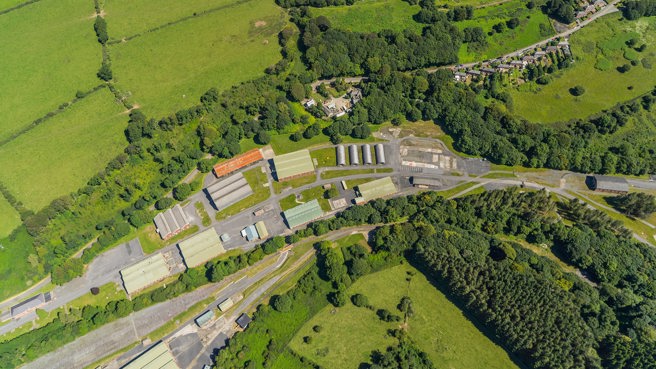
Trecwn, located in North Pembrokeshire, is about 3 miles south of Fishguard. The site, a former Royal Navy Armaments Depot, spans 1000 acres and is accessible via a private road off the A40.
Pembrokeshire -
 Global Centre of Rail Excellence Transport
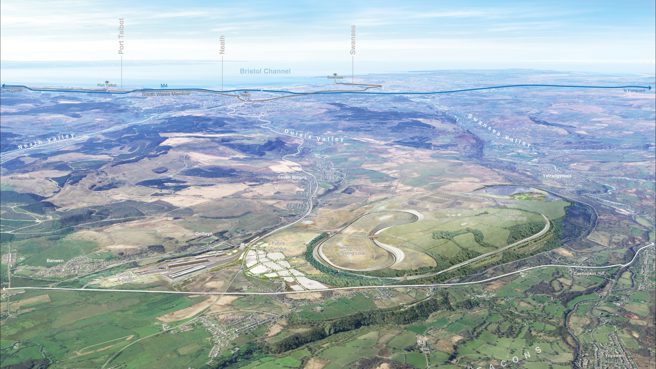
GCRE is a rail and energy innovation facility in the Dulais Valley, providing Europe-unique testing and R&D on a 700-hectare site, including the UK’s first net-zero-in-operation railway with two 7km electrified test loops.
Neath Port Talbot